Is Your Garden Tap Ready for Summer? A London Homeowner's Guide
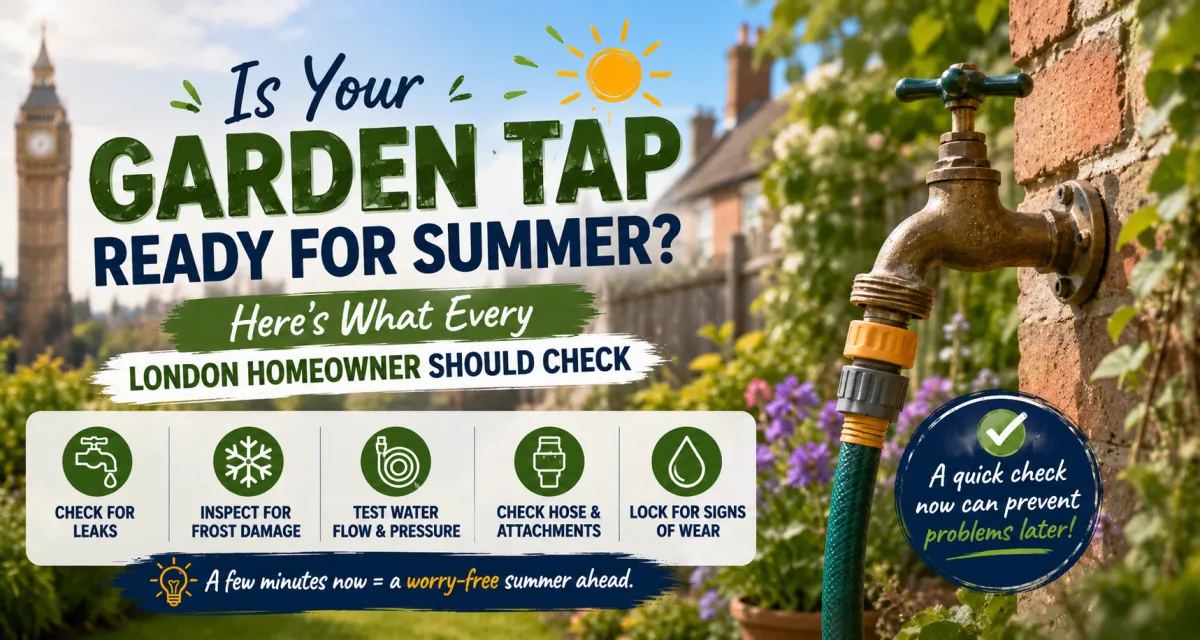
Is Your Garden Tap Ready for Summer? Here's What Every London Homeowner Should Check
The sun comes out, you head into the garden, reach for the hose and nothing happens. Or worse, water starts dripping from somewhere it definitely shouldn't.
It happens every single summer. Garden taps sit unused through the colder months and by the time you actually need them, something's gone wrong. Sometimes it's a minor annoyance. Sometimes it's a sign of a bigger problem that's been quietly developing since January.
The good news is that a few simple checks before the warm weather arrives can save you a lot of hassle and potentially a lot of money. Here's exactly what to look for.
Why Garden Taps Are Particularly Vulnerable in London
London winters aren't the harshest in the world, but they're cold enough to cause real damage to outdoor plumbing, especially in older properties. Water left sitting in outdoor pipes and tap fittings can freeze and expand, causing cracks in the pipework or the tap body itself that aren't always obvious until you turn the water back on.
On top of that, outdoor taps often get knocked, bumped, and generally neglected in a way that indoor plumbing doesn't. And because they're used infrequently, small problems, a worn washer, a slightly loose connection, a stiff valve, can go unnoticed for months.
The result? You try to use your garden tap on the first warm weekend of the year and something goes wrong at the worst possible time.
The Checks to Do Before You Use Your Garden Tap This Summer
You don't need to be a plumber to run through these, most of them take less than a minute.
1. Find Your Isolation Valve and Make Sure It's Open
Most modern outdoor taps in London homes have an isolation valve, a small tap or lever fitted on the pipe inside your house, usually under the kitchen sink or in a cupboard near the tap. This valve should have been turned off over winter to protect the outdoor pipework from freezing.
Before you do anything outside, find this valve and make sure it's fully open. If it's a lever, it should be parallel to the pipe. If it's a screw valve, turn it anti-clockwise until it stops.
If you can't find an isolation valve, your outdoor tap may be connected directly to your mains supply, worth knowing, and worth considering having one fitted for next winter.
2. Inspect the Tap for Visible Damage
Before turning anything on, take a close look at the tap itself. You're looking for:
Cracks in the tap body or the surrounding wall fitting
Corrosion or rust around the fittings
The tap head feeling stiff, seized, or loose
Any visible gaps or movement where the pipe enters the wall
Even small cracks can turn into significant leaks once water pressure is applied. If anything looks damaged, get it checked before turning the water on.
3. Check the Pipe Behind the Tap (if accessible)
If you can access the pipework behind your outdoor tap, either from inside the house or from a utility area, give it a quick inspection. Look for:
Any signs of corrosion or mineral buildup
Joints that look slightly separated or poorly sealed
Damp patches on the wall around the pipe entry point
Damp around an outdoor tap pipe is often a sign of a slow leak that's been going on for a while and needs attention.
4. Turn the Tap On Slowly and Watch Carefully
Once you've done your visual checks, turn the water on, but do it gradually and watch closely as you do.
What you want to see: a steady, consistent flow of water from the tap.
What to look out for:
Water dripping or trickling from around the tap head or handle (worn washer)
Leaks from the back plate where the tap meets the wall (loose fitting or cracked seal)
Water seeping through the wall from inside the house (pipe joint issue)
Unusually low pressure compared to your indoor taps (possible blockage or partial freeze damage)
The tap handle turning but no water coming out (frozen or blocked pipe, or isolation valve still closed)
If you notice any of these, turn the water off and call a plumber rather than leaving it running.
5. Test Your Hose Connection
If you're planning to use a hose this summer, connect it up and check the connector fitting as well as the tap. Hose connectors are a surprisingly common source of leaks, the rubber washers inside them degrade over time and often need replacing after winter. A new hose connector washer costs pennies and takes thirty seconds to swap out.
Common Problems We Find With London Garden Taps
Based on the calls we get every summer, here are the issues that come up most often:
The tap drips constantly, even when fully turned off
Almost always a worn tap washer. This is one of the most common and most straightforward plumbing repairs there is, a plumber can sort it in under an hour. Don't ignore it though; a constantly dripping outdoor tap can waste thousands of litres of water over a summer and add noticeably to your bill.
The tap handle turns but nothing comes out
Three likely causes: the isolation valve inside is still closed, the pipe has a partial blockage from debris or mineral buildup, or the pipe suffered freeze damage over winter and has a crack or collapse somewhere along its length. The first is something you can check yourself. The other two need a plumber.
There's water coming through the wall around the tap
This is the one that needs the most urgent attention. Water tracking back through the wall means there's a leak at the back plate, at a pipe joint, or in the pipe itself behind the wall. Left unchecked it causes damp, damage to brickwork and interior walls, and can eventually affect the structure of the surrounding area. Get it looked at promptly.
The tap is seized and won't turn at all
Outdoor taps seize up when they haven't been used for a long time, particularly in older properties with brass or chrome fittings. Don't force it, you risk snapping the tap head or damaging the fitting behind it. A plumber can free it safely or replace the tap if needed.
There's no outdoor tap at all
Plenty of London homes, especially flats and conversions, don't have an outdoor tap fitted. If you've been using a long hose run from your kitchen or bathroom all this time, it's worth knowing that having a proper outdoor tap installed is a relatively quick and affordable job. A qualified plumber can fit one in a few hours, and it makes a genuine difference to how usable your garden is in summer.
Should You Lag Your Outdoor Tap Next Winter?
While you've got it on your mind, yes, absolutely. Lagging (insulating) your outdoor tap and the pipe behind it is cheap, easy, and makes a real difference in preventing freeze damage. You can buy outdoor tap covers and pipe lagging from any DIY store for a few pounds. It takes about ten minutes to fit and can save you a plumbing call-out next spring.
Worth doing at the end of this summer before you forget again.
When to Call a Plumber
To summarise, call us if:
Your tap is dripping and won't stop, even when fully closed
Water is coming through the wall around the tap or pipe
The tap handle turns but no water comes out and the isolation valve is open
The tap is seized and won't turn
You want a new outdoor tap fitted
Anything just doesn't look or feel right
Garden tap problems are almost always quick and affordable to fix when caught early. The ones that get expensive are the ones people leave for another few weeks.
London Plumbers & Property Maintenance, Here to Help
We fit, repair, and replace outdoor taps across all major London boroughs every summer. Whether you've got a dripping tap, a seized fitting, freeze damage from the winter, or you simply want a new tap installed, we can help.
We offer free quotes, honest advice, and same-day appointments where possible. Give us a call before your garden tap becomes a bigger problem than it needs to be.
Got a garden tap problem? Get in touch today.
📞 07538 238186
Or fill in our contact form on our home page